The Debt Snowball Savings Challenge Workbook: A Practical Tool for Financial Management
Managing personal finances can be overwhelming, especially when dealing with debt and trying to build savings. The Debt Snowball Savings Challenge Workbook offers a structured approach to help individuals take control of their financial situation. This workbook is designed for those who want a simple yet effective system to organize their money, reduce debt, and develop consistent saving habits. Whether you're just starting out or looking for a new way to stay on track, this tool provides the necessary structure and guidance.
What Is the Debt Snowball Savings Challenge Workbook?
The Debt Snowball Savings Challenge Workbook is a printable resource that combines elements of budgeting, debt management, and savings planning into one cohesive system. It uses the popular debt snowball method, which focuses on paying off smaller debts first to build momentum and motivation. This approach helps users feel a sense of accomplishment as they eliminate each debt, making it easier to stay committed to the process.
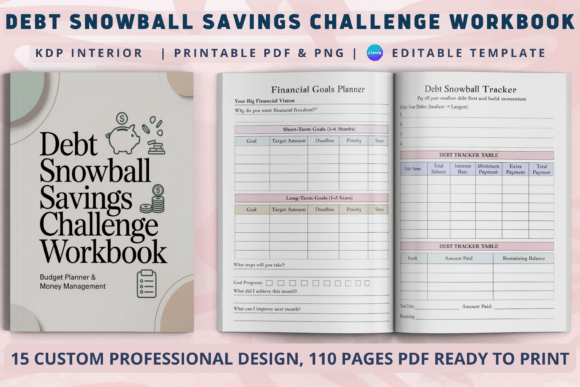
This workbook includes various tools and trackers to help users monitor their progress. From financial goal planning to expense tracking, each section is designed to simplify the financial journey. Users can also participate in different savings challenges, such as the 30-Day Savings Challenge or the 52 Weeks Savings Challenge, to build long-term savings habits.
Key Features and Components
The Debt Snowball Savings Challenge Workbook is packed with features that make it an ideal choice for beginners and intermediate users alike. Here are some of the key components included:
- Cover Page: Personalizes the workbook for the user.
- This Journal Belongs To Page: Helps users take ownership of their financial goals.
- How to Use This Workbook Guide: Provides clear instructions on how to get started.
- Financial Goals Planner: Assists in setting short- and long-term financial objectives.
- Debt Overview Tracker: Offers a snapshot of all outstanding debts.
- Debt Snowball Tracker: Helps users visualize and manage their debt repayment plan.
- Monthly Budget Planner: Enables users to create and adjust their monthly budgets.
- Expense Tracker: Keeps a record of daily expenses to identify areas for improvement.
- Savings Goal Tracker: Tracks progress toward specific savings targets.
- 30-Day Savings Challenge: Encourages small, consistent savings over a month.
- 52 Weeks Savings Challenge: Builds up savings gradually over the course of a year.
- No-Spend Challenge Tracker: Helps users practice mindful spending habits.
- Bill Payment Tracker: Ensures timely payments and avoids late fees.
- Monthly Reflection Page: Promotes self-assessment and adjustment of financial strategies.
With these tools, users have everything they need to stay organized and motivated throughout their financial journey.
Comparing the Debt Snowball Savings Challenge Workbook to Similar Resources
While there are many resources available for managing debt and building savings, the Debt Snowball Savings Challenge Workbook stands out for its simplicity and comprehensive design. Unlike some digital apps or online tools that may require subscriptions or complex interfaces, this workbook is accessible and easy to use right from the start.
Compared to other physical workbooks, this one integrates the debt snowball method directly into its structure, making it more focused on debt elimination than general budgeting. Other workbooks might emphasize investment strategies or retirement planning, which may not be suitable for someone primarily concerned with paying off debt and building savings.
Additionally, the Debt Snowball Savings Challenge Workbook is designed with a clean and minimal layout, making it easy to print and use daily. This is a significant advantage over cluttered or overly complicated formats that can be difficult to navigate.
When Is This Workbook the Right Choice?
The Debt Snowball Savings Challenge Workbook is particularly well-suited for individuals who are new to personal finance and want a straightforward, step-by-step approach to managing their money. It's also a great option for those who prefer hands-on tools rather than digital apps or software.
If your primary goal is to pay off debt using the snowball method while simultaneously building savings, this workbook can be an excellent fit. It’s especially useful for people who want to develop consistent financial habits without relying on external platforms.
However, if you’re looking for more advanced financial planning tools or need real-time data analysis, you may find digital budgeting apps or financial advisors more appropriate. These options offer greater flexibility and automation, which can be beneficial for more complex financial situations.
Strengths, Tradeoffs, and Limitations
The Debt Snowball Savings Challenge Workbook has several strengths that make it a valuable resource. Its structured approach helps users stay focused on their goals, and the variety of trackers ensures that every aspect of financial management is covered. Additionally, the inclusion of multiple savings challenges makes it engaging and motivating for users who enjoy setting and achieving milestones.
However, like any tool, it has its limitations. Since it’s a static workbook, it doesn’t provide real-time updates or notifications, which some users may find inconvenient. It also requires manual input and tracking, which could be time-consuming for those who prefer automated systems.
Another consideration is that the workbook is best suited for individuals who are comfortable with paper-based planning. If you prefer digital tools or need access to your financial data on multiple devices, you may need to supplement this workbook with other resources.
Realistic Examples and Practical Comparisons
Let’s consider a practical example: Sarah is a young professional with $5,000 in credit card debt and wants to build an emergency fund. She chooses the Debt Snowball Savings Challenge Workbook because it aligns with her goal of paying off smaller debts first while saving regularly. Using the Debt Snowball Tracker, she creates a plan to pay off her smallest debt first, then moves on to the next one. At the same time, she participates in the 30-Day Savings Challenge to build a small emergency fund.
In comparison, if Sarah were to use a digital budgeting app, she would have access to real-time data and alerts but may lack the visual and motivational aspects provided by the workbook. On the other hand, if she were to consult a financial advisor, she would receive personalized advice but may incur additional costs.
The Debt Snowball Savings Challenge Workbook offers a middle ground—providing structure and motivation without the cost or complexity of other options.
Conclusion
The Debt Snowball Savings Challenge Workbook is a practical and effective tool for individuals looking to take control of their finances. With its focus on the debt snowball method, comprehensive tracking features, and engaging savings challenges, it offers a structured approach to managing debt and building savings. While it may not be the best fit for everyone, it is an excellent choice for those who prefer a hands-on, paper-based approach to financial planning.
Whether you're just starting your financial journey or looking for a new way to stay on track, this workbook can help you achieve your goals. By combining debt management with savings planning, it provides a balanced and realistic strategy for improving your financial health.